How to Sell Products on Instagram and WhatsApp in South Africa
May 1, 2026
How much does it cost to start an online store in South Africa?
June 12, 2026
“Am I building a business, or just renting space on someone else’s platform?” This is a question that South Africans often ask themselves when planning to start selling online. The answer is not so straightforward. The eCommerce market in South Africa is rapidly growing, valued at R128–141 billion in 2026. So, the market is there. But how do you get a slice of the pie?
There are many benefits of running your own online store, as there are with selling products on marketplaces. Before you decide which is best for you, consider aspects such as fees, order fulfilment, and branding. These are what make a successful online business in SA’s competitive eCommerce market.
If you’re undecided about whether you should run your own online store or list your products on marketplaces, this guide is just for you. It covers each selling technique, its pros and cons, and different scenarios for when you should pick one over the other, or use both. Let’s dive in!
Marketplace selling explained
Firstly, “What is an online marketplace?” In simple terms, a marketplace is a digital platform that connects many third-party sellers to a broad range of buyers and facilitates online transactions.
One of the many eCommerce platforms SA has to offer, marketplaces offer products and services from various merchants, allowing customers to compare prices and features across different sellers, making marketplace selling competitive.
“How do online marketplaces work?” It’s fairly simple: the seller signs up for an account, lists their products or services, sells to customers, and pays a service fee and/or sales commission.
Marketplaces in South Africa have different fee structures and commission rates, with many increasingly adopting a hybrid commission structure. These charges typically include a monthly platform subscription fee, a percentage of successful sales, fulfilment costs, and storage fees.
The cost of selling on online marketplaces varies and depends on numerous factors. This unpredictability can hinder success for beginners or small businesses with tiny budgets.
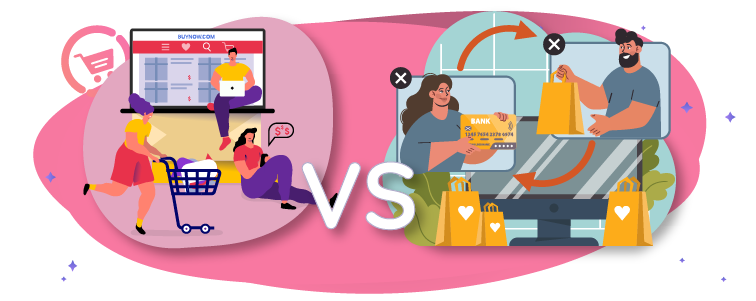
Types of online marketplaces and how they work
There are several forms of online marketplaces. While they work similarly, service fees and commission charges vary, making it crucial to choose the right platform for your business.
Here’s a quick breakdown of the types of online marketplaces in South Africa:
- Classifieds: These platforms let you list your products or services for free. Gumtree, JunkMail, and Facebook Marketplace are popular options that allow free product listings; however, you, as the seller, are responsible for payment processing fees and shipping costs where applicable.
- Commission-based: Some of these platforms offer free listing, but charge a commission fee on all products sold. Additional charges may apply, such as payment processing, monthly platform subscription fees, and storage costs. Popular options include Takealot, Makro, Bob Shop (formerly Bidorbuy), and international giant, Amazon. Yaga is growing in popularity thanks to its unique model, which provides built-in escrow protection, integrated shipping, and a buyer protection fee on transactions.
Marketplaces also come in different forms. Here’s an overview of the available options:
- Product-based sites: The most common, offering goods from hundreds of sellers.
- Service-based sites: Rapidly growing marketplaces such as Upwork, ServiceLink SA, and SweepSouth, which connect customers with professional services providers.
- Business-to-business (B2B): These are marketplaces where suppliers or manufacturers sell bulk inventory or raw materials to other businesses.
- Consumer-to-consumer (C2C): Marketplaces like Etsy, Yaga and Facebook Marketplace, where individual users engage in peer-to-peer commerce.
Marketplace selling pros
There are many advantages to selling products or services on an online marketplace in South Africa. These cover a wide range of features, including:
- Built-in audience: You instantly gain access to thousands of potential customers. This is a major advantage in South Africa, where building traffic from scratch can be slow.
- Faster time to market: You can start selling within days, not weeks. Marketplaces let you sell online without building a website or worrying about technical setup.
- Established trust: Customers already trust platforms like Takealot. That trust transfers to your products. Reviews and star ratings also give an extra layer of credibility.
- Logistics support: Many marketplaces offer fulfilment services that handle storage, packing, delivery, and returns.
Marketplace selling cons
Selling on online marketplaces also comes with a set of disadvantages. These include:
- High competition: You’re competing with dozens (or hundreds) of sellers offering similar products. Price often becomes the deciding factor here, cutting into margins.
- Limited brand visibility: Customers remember the platform, not your business.
- Platform dependency: You don’t control the rules. Algorithm changes, policy updates, or account suspensions can impact your sales overnight.
- No customer ownership: You don’t get full access to customer data. That means limited ability to build long-term relationships.
- Fees add up quickly: Between commission fees, fulfilment costs, and ad spend, your margins can shrink faster than expected.
Benefits of owning your own online store
Owning your own online store shifts the dynamic entirely. Instead of operating within someone else’s ecosystem, you create your own. This allows you to bypass many of the disadvantages associated with selling on marketplaces, giving you more control over your business’s success.
That said, setting up an online store can be time-consuming and require upfront investment; that’s where Netcash Shop comes in. With the free 30-day trial, you get an easy website builder, an SSL certificate, domain hosting, and access to the Netcash eCommerce Payment Gateway.
What is an eCommerce store?
An eCommerce (or online) store is a standalone website where you sell directly to customers. You control everything, from product listings and pricing to branding, fulfilment, and customer experience. Unlike a marketplace, there is no middleman between you and your buyers.
Selling on a website puts you in the driver’s seat. From choosing your preferred website builder, branding, and custom domain name, to managing your own marketing strategies, an online store gives you ultimate control. However, these features often require both time and money.
Online store pros
Beyond greater control over product listings and marketing, selling on your own website offers many benefits, including flexible pricing and brand ownership. Some advantages include:
- Full control over your brand: You decide how your store looks, feels, and communicates. This is critical for building recognition.
- Higher profit margins: No marketplace commissions eating into every sale.
- Customer data ownership: You can collect emails, track buying behaviour, and build relationships over time that drive repeat sales.
- Flexibility in payment methods: You can offer multiple payment solutions to suit every customer’s preference. With a secure payment processor, your store can enable card transactions, Instant EFTs, Scan-to-Pay, and even flexible Buy Now, Pay Later (BNPL).
- Customisation in pricing and promotions: Run discounts, sales bundles, or loyalty programmes without restrictions.
- Long-term business asset: Your store becomes something you own and grow over time, not something you rent temporarily.
Online store cons
Running an online store requires work and startup investments, which may hinder initial success. As these costs lessen over time, other disadvantages may arise. These include:
- No built-in traffic: You need to actively bring customers to your store through marketing efforts such as paid ads, search engine optimisation, and social media management.
- Setup and learning curve: Platforms like Netcash Shop simplify the website-building and management process, but there’s still a learning curve. Custom branding and design can be fun, but technical setup, inventory management and shipping require know-how.
- Responsibility for ongoing operations: You handle everything, from marketing to fulfilment, unless you outsource (which further incurs operational costs).

eCommerce vs Marketplace: Key differences
If you’re weighing up a marketplace vs an online store in South Africa, which one actually makes more sense? In short, the difference boils down to control vs convenience. Marketplaces offer a lower barrier to entry and a built-in customer base, while your own store offers ownership and flexibility.
A useful way to think about it is that selling on a marketplace is like renting a stall in a busy mall, while running your own eCommerce shop is like owning a standalone brick-and-mortar store.
Below, we break down the key differences between an online store and marketplaces in detail.
Fees vs profit margins
Costs are a massive factor in deciding where to sell online. Marketplaces incur fixed and variable costs, making it hard to budget or forecast revenue. Listing or subscription fees, sales commission, fulfilment and storage fees, and ad spend can all eat into eCommerce margins. It’s crucial to note that these costs are tied to every sale; thus, as you grow, so do your expenses.
Similarly, there are costs associated with running an online store. These include monthly platform subscription costs, payment processing fees, and marketing spend. While these may also vary, they are more predictable and, importantly, don’t scale directly with each sale.
Order fulfillment
Fulfilment plays a major role in customer satisfaction. With managed logistics (i.e., shipping and storage) and faster storefront setup, marketplaces make it easier to quickly sell online. That said, the lack of control over customer experience can deter brand and trust-building efforts.
With an eCommerce store, you’ll either self-manage logistics or outsource to third parties. From packaging to delivery and branding, you’ll have the flexibility to cater for your ideal customer. While the setup can be tedious and costly, operational costs typically plateau over time.
Branding, control, and customer ownership
This is where the gap between marketplaces and online stores becomes most obvious. On marketplaces, your products are shown alongside dozens of competitors. Even if a customer buys from you, they are more likely to remember the platform (e.g. Takealot), not your brand.
An eCommerce shop gives you control over customer experience. You can build a recognisable brand, offer flexible payment methods, and sell directly to your target market. Ownership also allows you to collect customer data, analyse it, and use their feedback to build relationships.
Marketing
Marketing is unavoidable. Whether you’re on a marketplace or running your own store, you need to direct traffic to your products. Marketplaces offer the advantage of a built-in customer base, but competition is fierce. Paid advertising is optional, but brand building is very limited.
With an online shop, you can use a combination of organic and paid marketing strategies. These include social media campaigns, search engine optimisation, paid ads, and email marketing. You have full control over these elements and can adjust specifications as needed.

When should you choose each option?
Whether you should list your products on a marketplace or sell directly from your online store depends on where your business is right now and where you want it to go.
When marketplaces make more sense
Marketplaces are great for gaining early traction. So, selling on a marketplace is ideal when:
- You’re just starting out
- You want quick exposure
- You don’t have marketing experience
- You want to test product demand
When your own store wins
This is where real scalability happens. Sell through your own website when:
- You want to build a long-term brand
- You care about customer relationships
- You want higher margins
- You’re ready to invest in marketing
When to use both marketplaces and an online store
If you want to start selling right away, but also care about brand positioning and longevity, the smartest approach is to use a hybrid model.
Use marketplaces for:
- Product discovery
- Customer acquisition
- Testing new products
Use your own store for:
- Repeat purchases
- Brand building
- Higher-margin sales
Order fulfillment
Fulfilment plays a major role in customer satisfaction. With managed logistics (i.e., shipping and storage) and faster storefront setup, marketplaces make it easier to quickly sell online. That said, the lack of control over customer experience can deter brand and trust-building efforts.
With an eCommerce store, you’ll either self-manage logistics or outsource to third parties. From packaging to delivery and branding, you’ll have the flexibility to cater for your ideal customer. While the setup can be tedious and costly, operational costs typically plateau over time.
Branding, control, and customer ownership
This is where the gap between marketplaces and online stores becomes most obvious. On marketplaces, your products are shown alongside dozens of competitors. Even if a customer buys from you, they are more likely to remember the platform (e.g. Takealot), not your brand.
An eCommerce shop gives you control over customer experience. You can build a recognisable brand, offer flexible payment methods, and sell directly to your target market. Ownership also allows you to collect customer data, analyse it, and use their feedback to build relationships.
Marketing
Marketing is unavoidable. Whether you’re on a marketplace or running your own store, you need to direct traffic to your products. Marketplaces offer the advantage of a built-in customer base, but competition is fierce. Paid advertising is optional, but brand building is very limited.
With an online shop, you can use a combination of organic and paid marketing strategies. These include social media campaigns, search engine optimisation, paid ads, and email marketing. You have full control over these elements and can adjust specifications as needed.
Frequently asked questions
What is the best online selling platform in South Africa?
It depends on your goals. Marketplaces are ideal for quick exposure, while your own eCommerce platform is better for long-term growth and profitability.
Should I sell on Takealot or my own website?
If you’re just starting out, a marketplace like Takealot can help you gain traction. But for sustainable growth, owning your own website is essential.
How can I sell on Amazon South Africa?
To sell on Amazon in South Africa, you’ll need to register as a seller, upload your products, and choose between handling fulfilment yourself or using Amazon’s fulfilment services. Customers can pay with debit and credit cards, gift cards, and digital payment methods, including EFT.
What are marketplace fees?
Marketplace fees typically include commissions per sale, fulfilment costs, listing fees, and advertising spend. These vary by platform but can significantly impact your margins.
Is it better to own your online store?
For long-term success, yes. Owning your store gives you control over your brand, access to first-hand customer data, and better profit margins.
Start selling online today with Netcash Shop
If you’re serious about building a sustainable online business in South Africa, owning your platform is a step you can’t afford to skip.
Netcash Shop makes it easy to launch your own eCommerce store without the complexity. From seamless payments to a user-friendly setup, it’s designed specifically for South African businesses looking to grow online.
You don’t have to choose between marketplaces and your own store forever. But at some point, every serious seller needs a home base.

Author:
Theresa Scott
eCommerce Support Consultant
Stay in Touch


Theresa Scott is a Technical Support Consultant at Netcash, dedicated to empowering eCommerce businesses through intentional problem-solving and streamlined digital solutions. With a background in relationship management and content strategy, Theresa brings a sharp focus to optimizing support experiences for South African startups and SMEs navigating the online space.

Subscribe to our mailing list to learn about our new features and marketing tips & tricks.